
01 · Double Helix
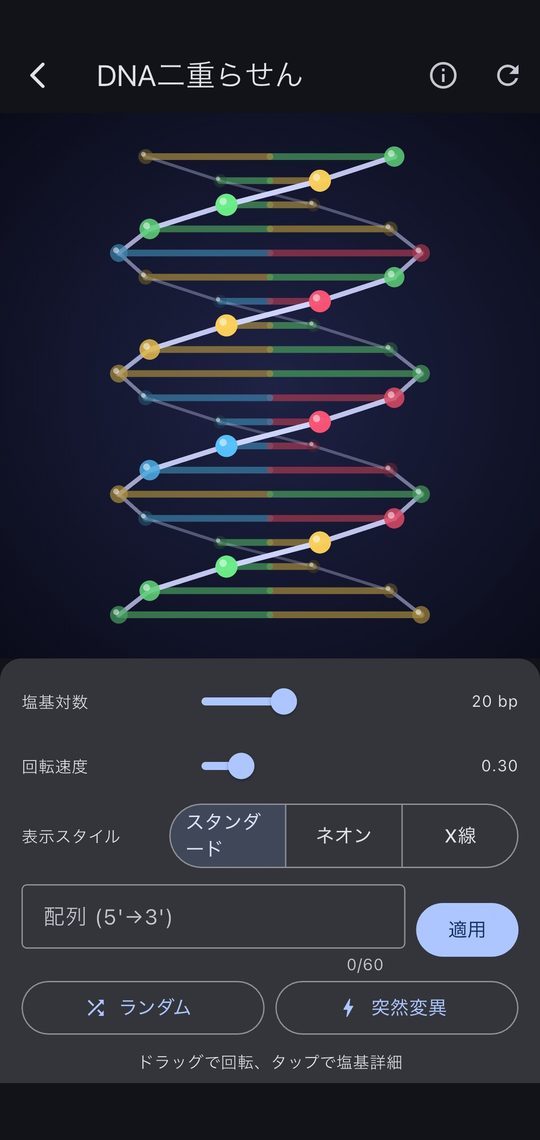
DNA Double Helix
Nucleotides gather, form A=T (2 hydrogen bonds) and G≡C (3) base pairs, and wind as two antiparallel strands into a right-handed helix in 3D. Spin the finished helix with your finger.
From the DNA double helix and the central dogma to Mendelian crosses, meiosis, population genetics, phylogenetic trees, PCR and CRISPR — 11 genetics, DNA and evolution simulations that unfold in 4 steps and end with a real example from research or observation.
4 categories: DNA and gene expression, how inheritance works, populations and evolution, and biotechnology. Every mode unfolds in 4 steps, with labels on every part of each picture.
Nucleotides gather, form A=T (2 hydrogen bonds) and G≡C (3) base pairs, and wind as two antiparallel strands into a right-handed helix in 3D. Spin the finished helix with your finger.
Using the human insulin gene, follow transcription initiation, mRNA synthesis, splicing and export from the nucleus, and translation on the ribosome.
Read mRNA three bases at a time from the start codon AUG to a stop codon, with tRNAs bringing amino acids and a codon table. Switch to a synonymous substitution or a nonsense mutation.
Cross round and wrinkled peas through F1 and F2. Check 3:1 (9:3:3:1 with two genes) in a Punnett square and compare it with Mendel's own counts of 5474 : 1850.
DNA replication, pairing of homologous chromosomes and crossing over, then meiosis I and II until four gametes form. Tell parental and recombinant gametes apart, and turn crossing over on or off.
Stain 46 chromosomes with G-banding and arrange them by size and centromere position into pairs 1-22 and the sex chromosomes to complete the karyotype 46,XX or 46,XY.
Using industrial melanism in the peppered moth, see mutation, environmental change and natural selection spread the dark form generation by generation.
See allele frequencies p and q give genotypes p², 2pq and q², and stay the same generation after generation. Change p with a slider.
Build a tree with the UPGMA method from DNA differences between humans, chimpanzees, gorillas, orangutans and gibbons.
Watch DNA double in three steps (denaturation at 95 °C, annealing at about 58 °C, extension at 72 °C) and grow about a billion-fold in 30 cycles, with a temperature graph.
A guide RNA and Cas9 find a PAM sequence (NGG) and cut both strands, and the break is repaired by NHEJ (deletions and insertions) or HDR (rewriting). Switch between the two pathways.
Step back and forth with ◀ ▶ and change the speed as you follow how genetics works, one step at a time.

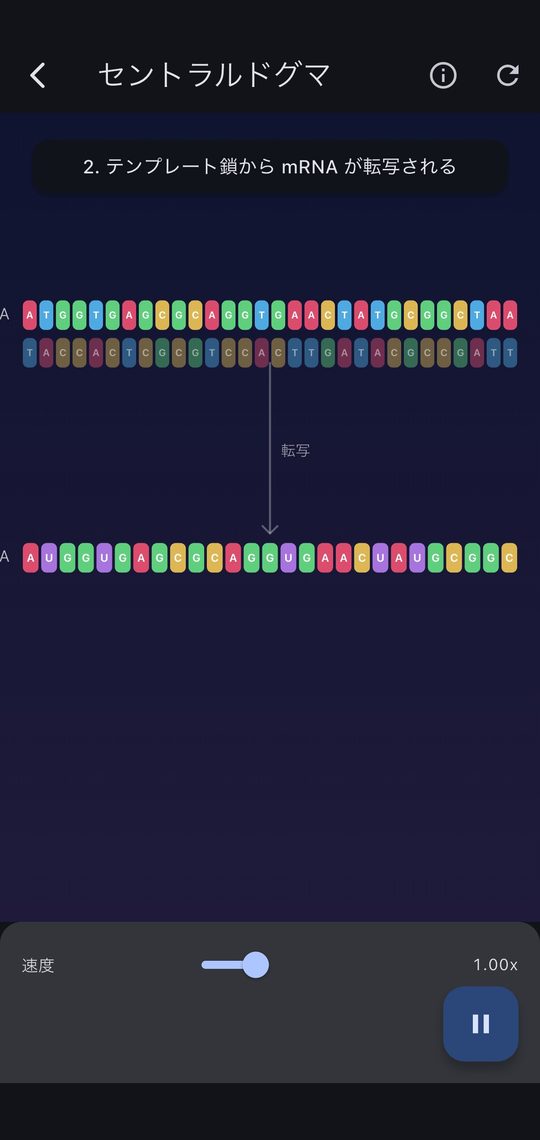
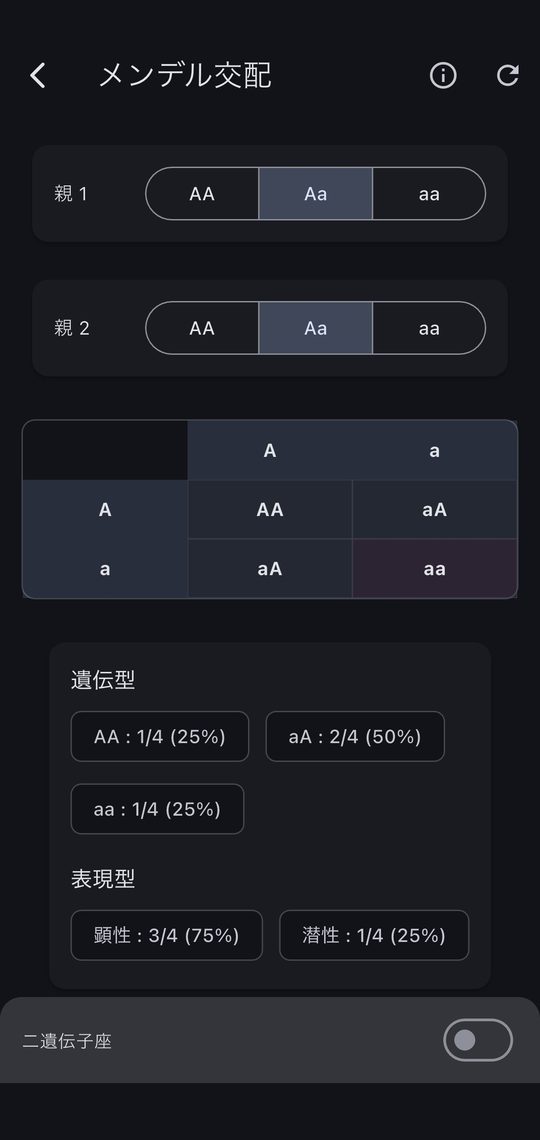
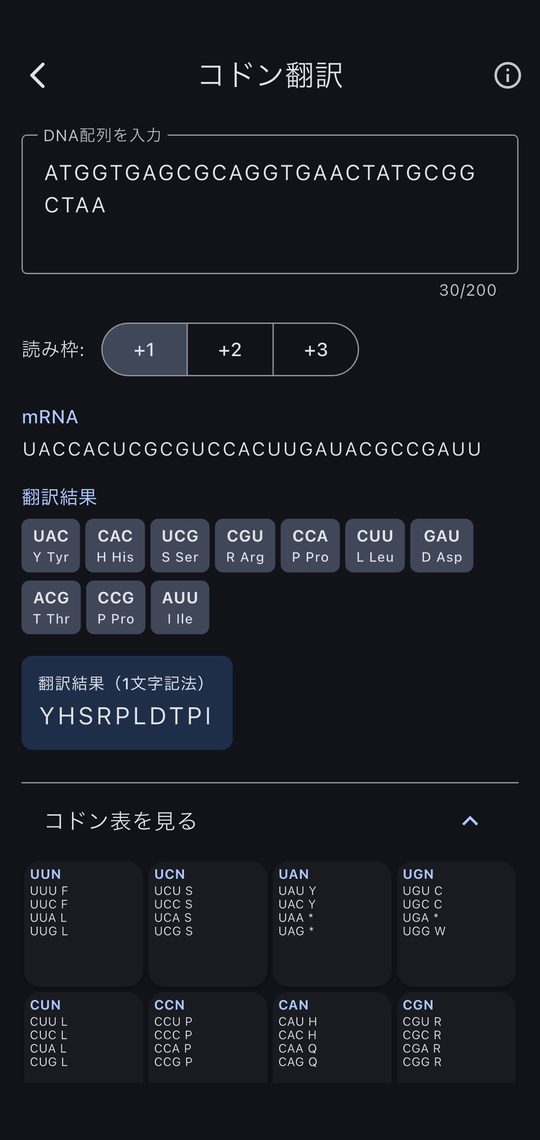
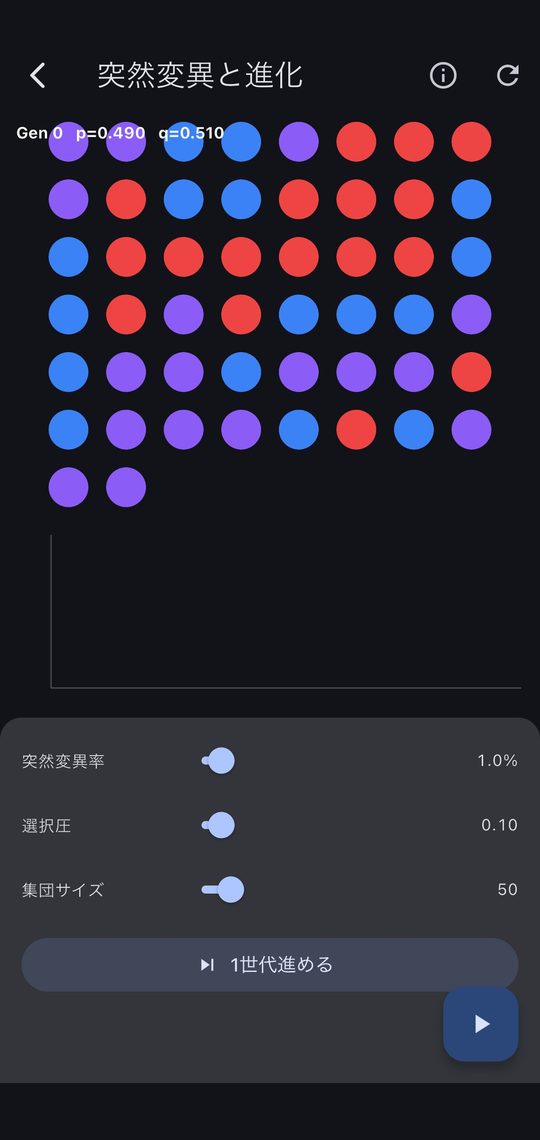
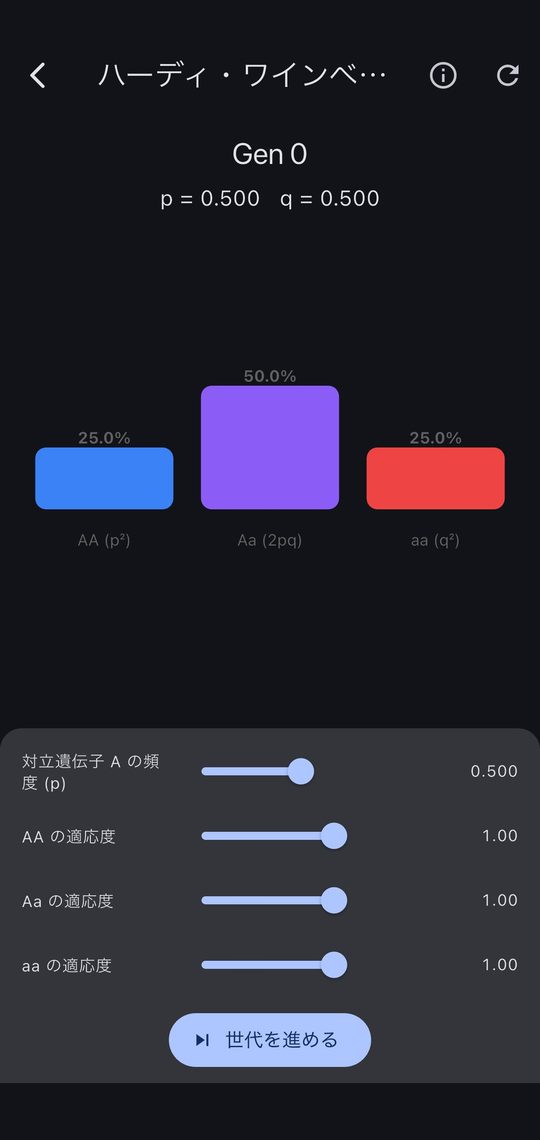
Every mode unfolds in 4 steps and ends with a real example from research or observation. Step back and forth with ◀ ▶ and change the speed.
Every part of each picture is labeled, and each screen has an explanation sheet with formulas, from hydrogen bonds in base pairs to p² + 2pq + q² = 1 and how CRISPR works.
Dark and light themes, canvas and controls side by side in landscape, and support for larger text. Works on iPhone, iPad and Android.
English, Japanese, Chinese, Korean, Spanish, Arabic and 67 more. The app follows your device language automatically.
The app is free. There are no in-app purchases, subscriptions or paid unlocks.
A Pangle banner ad is shown at the bottom of the screen. On iOS, the App Tracking Transparency (ATT) prompt appears at launch, and ads are personalized only if you allow tracking. On Android, the app asks once whether ads may be personalized. Either choice can be changed later from "About this app" > "Ad settings" (on iOS, this appears after you have answered the tracking prompt).